


Back
Deliberate Self-Harm: Why It Happens and What Recovery Can Look Like
15 Min Read
Table of contents
- Key Takeaways
- 1. What Do We Mean By Deliberate Self-Harm?
- 2. How Symptoms of Self-Harm Often Show Up
- 3. Causes Of Deliberate Self-Harm: Pressure, Pain, And Silence
- 4. IMPACT ON LIFE: HOW SELF-HARM AFFECTS EVERYDAY LIFE
- 5. TYPES: DIFFERENT WAYS SELF-HARM CAN OCCUR
- 6. DIAGNOSIS: HOW CLINICIANS LOOK AT SELF-HARM
- 7. COMORBIDITY: WHEN SELF-HARM EXISTS ALONGSIDE OTHER CONDITIONS
- 8. TREATMENT OPTIONS THAT FOCUS ON SAFETY AND RECOVERY
- 9. TAKING THE FIRST STEP
- 10. HOW LOVED ONES CAN OFFER REAL SUPPORT
- 11. What To Look For In Professional Care
- 12. LIFE AFTER SELF-HARM: ONGOING SUPPORT MATTERS
- 13. WHEN SAFETY COMES FIRST
- 14. PREVENTION STARTS BEFORE THE CRISIS
- 15. Am I At Risk?
- Hope Is All Around
- Frequently Asked Questions (FAQs) on Self-Harm
- Bibliography
Table of contents
Key Takeaways 
Trigger Warning: This content discusses deliberate self-harm and may be emotionally distressing. If you or someone you know is struggling, help is always available. You’re not alone. Please call this number immediately: +91 84481 56500 / 1244265238 or reach out to a mental health professional for urgent support.Trigger Warning and Helpline Information
1. What Do We Mean By Deliberate Self-Harm?
What is deliberate self-harm, and how does it differ from feelings of sadness and grief? Let’s Talk About Deliberate Self-Harm Sometimes the mind struggles to carry the weight of intense emotions alone, and the body reflects what it cannot manage. In moments of overwhelming strain, some people turn inward, not with the intention of ending their life, but to interrupt the intensity of their feelings. According to the DSM-5-TR, under Conditions for Further Study, Non-Suicidal Self-Injury Disorder (NSSI) is recognised as a pattern of repeated self-harm behaviours carried out without suicidal intent. Clinical risk assessment for NSSI focuses on understanding why physical injury is being used as a coping response to emotional distress, rather than assessing intent to die. Mental health professionals evaluate self-harm risk factors such as past trauma, co-existing mental health conditions, difficulties with emotional regulation, and ongoing environmental stress. Particular attention is given to self-harm in teens, as adolescents face higher vulnerability due to emotional development, impulsivity, and academic or social pressure. This structured assessment helps determine risk level, safety needs, and appropriate clinical support. This real story shows how getting help can change things for someone struggling with self-harm: Ananya was 22 years old. She felt a huge need to hurt herself when the stress of her final year of college became too much. She always wore long sleeves to hide the cuts and scars from her struggles with self-harm. After a painful time, she took a brave step: she went to see a good doctor who specialised in helping people with big, painful feelings. When they met, Ananya felt scared as she told the doctor about her worry and self-hate. The doctor was kind and calm. "Ananya," the doctor said, "it is normal to react this way when you have too much emotional pain. We will teach you new, safe ways to deal with your feelings so you can stop self-harming." Ananya began learning what made her feel strong emotions. She started practising skills to calm herself down. She did not get better right away, but with regular therapy, she found a strong, lasting hope. She found deep hope through consistent therapy, no longer letting her self-harm behaviours control her, and finally started to understand her own worth.
2. How Symptoms of Self-Harm Often Show Up
What are some symptoms experienced by individuals with self-harm behaviours? Recognising the signs is the first step toward getting help. These self-harm behaviours include: Unexplained Injuries: Frequent, unexplained cuts, bruises, burns, or scars on the body. This is often accompanied by constantly wearing long sleeves or pants, even in warm weather. Avoidance of Physical Activities: Avoiding activities like swimming or sports that require revealing skin as a method of concealment. Emotional Distress or Mood Swings: Intense, rapidly shifting emotions, anxiety, or sadness that appear impulsive and unexpected, indicating internal turmoil. Isolation or Withdrawal: Avoiding social interactions and withdrawing from activities once enjoyed, often due to feelings of shame, guilt, and the desire to conceal the behaviour. Signs of Substance Abuse: Linking self-harm with drug or alcohol use as a dual coping mechanism to numb emotional pain.Recognising the Signs: Symptoms of Self-Harm
3. Causes Of Deliberate Self-Harm: Pressure, Pain, And Silence
How common is deliberate self-harm? Are there any known causes for it? In India, intense socio-cultural pressures, academic success, and career expectations combine with the challenge of discussing mental health openly, increasing emotional distress and limiting healthy ways to seek support. Failure is often internalised as personal fault. When individuals suppress their emotions, they sometimes turn to self-harm as a way to cope, mistakenly believing it offers temporary release or control. The psychology of self-harm shows that it is a deliberate action done to handle emotions or pain that feels too strong to manage. It is almost always a private way to deal with intense, crushing feelings, and not a way to get attention. The act of self-harm gives a quick, temporary sense of relief. It works by turning a difficult, confusing emotional pain into a clear, sharp physical feeling that seems easier to control. However, this relief quickly disappears, and the person is usually left feeling terrible, ashamed, and guilty afterwards. Self-harm triggers are factors that lead an individual to self-injure: Emotional Regulation: Coping with intense emotions (anger, sadness, anxiety) where physical pain provides temporary relief (e.g., after loss or high stress). Feelings of Isolation: Loneliness, feeling disconnected, or a lack of social support. Past Trauma or Abuse: Dealing with the lasting emotional pain from past physical, emotional, or sexual abuse. Self-Punishment: Resorting to self-harm due to low self-esteem or chronic feelings of guilt, believing they deserve the pain. Control & Agency: Feeling that self-harm is a way to regain control over their body when life feels unmanageable. Sukoon Suggests: Use TIPP skills (Temperature, Intense Exercise, Paced Breathing, Progressive Muscle Relaxation) immediately when urges strike. Ask a Sukoon specialist how to use TIPP skills in a crisis.Why is Self-Harm Prevalent in India?
The Psychology Behind Self-Harm
Self-Harm Triggers
4. IMPACT ON LIFE: HOW SELF-HARM AFFECTS EVERYDAY LIFE
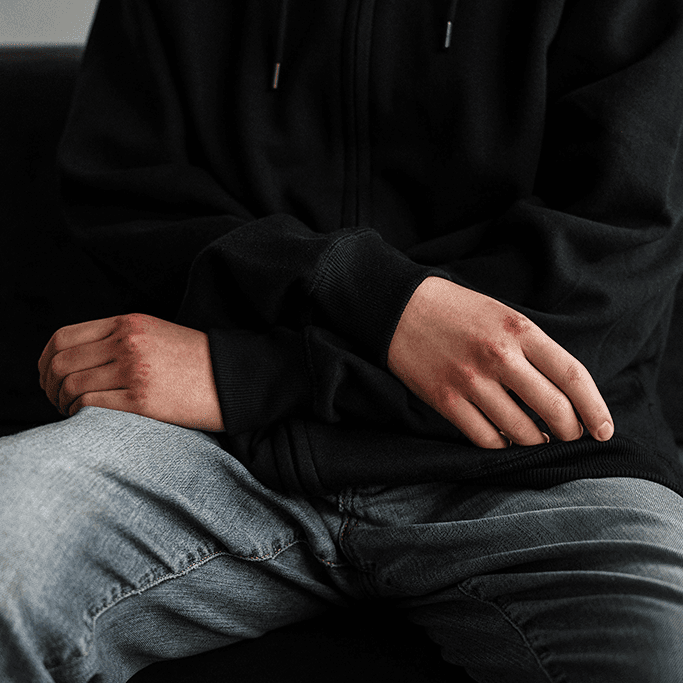
How does deliberate self-harm impact one’s daily life, functioning and relationships? Self-harm severely impacts all areas of life: Emotional and Psychological Impact: It reinforces a destructive cycle, intensifying shame and guilt, leading to further isolation. Daily Functioning: The need to hide injuries and manage emotional turmoil severely impairs concentration, motivation, and performance at work or school. Relationships: Withdrawal, concealment, and mood swings profoundly strain relationships with family and friends, eroding trust. Physical Health: Repeated injury leads to infections, chronic pain, and permanent scarring, creating long-term physical self-harm risk factors. Loneliness, Emotional Distress, and Self-Harm Risk A close-up of two limp hands resting together, symbolising loneliness, emotional pain, and vulnerability. The image reflects mental health struggles often linked to self-harm behaviours and non-suicidal self-injury.
5. TYPES: DIFFERENT WAYS SELF-HARM CAN OCCUR
What are the types of self-harm behaviours? Knowing the different types of self-harm helps in providing appropriate support: Cutting or Stabbing: The most common method, using sharp objects on hidden areas like arms or thighs to break emotional numbness. Burning: Hurting oneself with heated objects (cigarettes, lighters), often used for grounding during dissociation. Scratching: Using fingernails or sharp objects to scrape skin, often done to release emotional tension. Hitting Oneself: Striking oneself with fists or banging the head against walls, often driven by intense anger. Pulling out Hair: Repeatedly pulling hair from the scalp or eyebrows (Trichotillomania, also used for self-punishment). Interfering with Wound Healing: Picking at scabs or reopening wounds, which leads to infections and extends the cycle of injury. Self-Biting: Biting one's skin, often driven by stress or emotional pain.
6. DIAGNOSIS: HOW CLINICIANS LOOK AT SELF-HARM
How is deliberate self-harm diagnosed, and what does this process typically involve? Diagnosis relies on a comprehensive clinical assessment, as self-harm is often a symptom of underlying distress, not a standalone illness. Professionals look for: Detailed Medical History: Reviewing a person's history for patterns of unexplained injuries. Comprehensive Mental Health Assessment: Interviews to understand emotional state, self-harm triggers, and co-occurring disorders (e.g., depression, anxiety). Behavioural Patterns: Observing self-harm behaviours like avoiding social activities or consistently covering the body. Safety Evaluation: Assessing the individual's risk of suicidal thoughts to differentiate between NSSI and a suicide attempt. Building trust in a safe, non-judgmental environment is essential for accurate diagnosis. Sukoon Suggests: Start an 'Emotion journal: write your feelings and their sensation in your body, delaying the urge to react. Ask a Sukoon expert how emotional mapping finds your self-harm triggers.Diagnosing Self-Harm: What to Look For
7. COMORBIDITY: WHEN SELF-HARM EXISTS ALONGSIDE OTHER CONDITIONS
Can a person with self-harm behaviours also suffer from other mental health disorders? Self-harm rarely exists alone; it often intertwines with other mental health disorders, complicating self-harm treatment. Autism Spectrum Disorder (ASD) and Self-Harm: Autism and self-harm are strongly linked, as NSSI in individuals with ASD often results from sensory overload or communication stress. Obsessive-Compulsive Disorder (OCD) and Self-Harm: OCD and self-harm are related because self-harm may be used to temporarily relieve the pressure from intrusive thoughts and intense anxiety associated with the disorder. Attention-Deficit/Hyperactivity Disorder (ADHD) and Self-Harm: ADHD and self-harm are linked because the impulsivity and poor emotional control associated with the disorder significantly increase the risk of self-injury. Bipolar Disorder and Self-Harm: Bipolar Disorder and Self-Harm are linked, as NSSI is common during intense depressive or mixed episodes to cope with emotional pain or agitation. Post-Traumatic Stress Disorder (PTSD) and Self-Harm: PTSD and Self-Harm are linked as self-injury is often used to interrupt flashbacks or to feel "real" during emotional numbness. Eating Disorders and Self-Harm: Eating Disorders and Self-Harm coexist as a way to cope with self-loathing or failure related to control over food. Borderline Personality Disorder (BPD) and Self-Harm: BPD and Self-Harm are highly connected due to intense emotions, impulsivity, and fear of abandonment. Integrating Care for Multiple Disorders: Effective self-harm treatment requires integrated care that addresses all underlying conditions concurrently. Self-Harm Treatment and Professional Support An over-the-shoulder view from a psychiatrist’s perspective shows a young woman holding her head in distress, reflecting emotional struggle and the psychology of self-harm during a therapy session.Can Self-Harm Affect Other Mental Health Disorders?

8. TREATMENT OPTIONS THAT FOCUS ON SAFETY AND RECOVERY
What are the effective treatment options for deliberate self-harm? Self-harm treatment requires professional intervention focused on safety and root causes: Cognitive Behavioural Therapy (CBT) and Dialectical Behaviour Therapy (DBT): DBT is highly effective, focusing on building healthy coping mechanisms for self-harm, emotion regulation, and distress tolerance skills (like TIPP skills). CBT helps change negative thought patterns. Psychodynamic Therapy: Explores unconscious factors and past issues to gain insight into the behaviour's origins. Medication: A psychiatrist may prescribe medication to manage symptoms like impulsivity and mood swings when co-occurring disorders are present. Support Groups: Connecting with others who share similar experiences provides mutual support and reduces isolation.How to Stop Self-Harm: Effective Treatments
9. TAKING THE FIRST STEP
What steps can someone take if they think they may be engaging in deliberate self-harm? If you are struggling, reaching out immediately is the most critical step: Acknowledge the Behaviour: Understand that self-harm is a reaction to pain, and you deserve help and safety. Seek Professional Guidance Immediately: Contact a mental health professional, trusted doctor, or national helpline now. Talk to a Trusted Person: Confide in a reliable family member, friend, or counsellor for immediate emotional support. Prioritise Safety: Use crisis numbers provided for immediate assistance. Remove access to means of injury during moments of intense distress. Sukoon Suggests: List three trusted people and think of a simple request you could make for reaching out when you feel a crisis starting. Ask a Sukoon expert about building a crisis plan.
10. HOW LOVED ONES CAN OFFER REAL SUPPORT
How can friends and family provide meaningful support to someone engaging in self-harm behaviours? Caregivers must approach the situation with empathy, not judgment: Maintain Open Communication: Create a non-judgmental environment where the individual feels safe to share emotions. Focus on the Emotional Pain: Shift focus from the wounds to the underlying distress (loneliness, anxiety) driving the behaviour. Encourage Professional Help: Gently but firmly encourage guidance from a mental health professional. Educate Yourself: Understanding the motivations and self-harm triggers allows for more patient and compassionate support.
11. What To Look For In Professional Care
How can someone find a mental health professional who understands their specific needs? Finding the right professional is essential, especially one trained in DBT for NSSI. They must provide a safe, non-judgmental space and address co-occurring issues like trauma. Most importantly, good care involves: Risk Assessment: Regularly checking the frequency, severity, and triggers of self-harm while identifying protective factors. Safety Plan Development: Creating a personalised, step-by-step guide for crisis management. This plan lists immediate coping skills and key support contacts to use when urges strike.
12. LIFE AFTER SELF-HARM: ONGOING SUPPORT MATTERS
What kind of ongoing support is needed for someone in recovery from self-harm? Recovery requires dedicated aftercare to prevent relapse: Sustained Therapy: Consistent attendance (CBT/DBT) to continually reinforce healthy coping mechanisms for self-harm. Support Group Engagement: Regular connection with groups provides a safe space and reduces isolation. Monitoring and Adjustment: Regular check-ins with a psychiatrist (if needed) to ensure the self-harm treatment plan effectively targets underlying emotional triggers. Relapse Prevention Planning: Creating a strategy with a therapist to identify early warning signs and practice alternative coping skills. Sukoon Suggests: Replace destructive actions with strong sensory input: try holding ice, snapping a rubber band, or listening to loud music. Consult a Sukoon expert to match coping methods to your sensory profile.
13. WHEN SAFETY COMES FIRST
What steps are involved in crisis management for self-harm behaviours? Crisis management focuses on immediate safety and de-escalation: Immediate Safety Evaluation: Assessing the risk of suicidal thoughts or imminent self-harm behaviours. Use of Helplines: Individuals in crisis must use dedicated helpline numbers (like +91 84481 56500) for immediate intervention. Emotional Stabilisation: Using distress tolerance skills (TIPP skills) to manage intense, overwhelming emotions. Secure Environment: Ensuring the individual is in a safe place, with all means of injury removed, and continuous monitoring if the risk is high.
14. PREVENTION STARTS BEFORE THE CRISIS
What are effective strategies for preventing deliberate self-harm? Prevention involves building resilience and emotional health: Promoting Emotional Literacy: Teaching effective emotional regulation skills, especially for self-harm in teens, to process intense feelings constructively. Reducing Stigma: Open communication about mental health to normalise help-seeking behaviour in schools and workplaces. Early Intervention: Providing resources to children and adolescents with known self-harm risk factors (trauma, ADHD). Developing Healthy Coping Mechanisms: Actively teaching and reinforcing skills like mindfulness, exercise, and social problem-solving.
15. Am I At Risk?
Risk assessment for non-suicidal self-injury focuses on understanding who may be more vulnerable to developing self-harm behaviours. Mental health professionals do not consider one factor in isolation. Instead, they assess a combination of emotional, psychological, and social influences. Common self-harm risk factors include a history of trauma or abuse, ongoing emotional distress, and mental health conditions such as depression, anxiety, or personality disorders. Limited coping skills can increase risk, especially when intense emotions feel difficult to manage in healthy ways. Family history of self-harm is also considered, as behaviours can be learned through close exposure. Age is a crucial component of assessment. Self-harm in teens and young adults is more common due to emotional development, academic pressure, and social stress when seen in Indian contexts. Cultural and societal expectations are also reviewed, particularly in high-pressure environments. NSSI is self-harm without the intent to die, used for coping. Suicide involves the explicit desire to end life. Crucially, NSSI is a strong predictor of future suicide attempts, as it normalises self-injury and reduces the fear of pain, underscoring the extreme self-harm risk factor associated with the behaviour.Difference between Non-suicidal self-injury and Suicide (Final Note on Risk)
Hope Is All Around
Self-harm is a clear signal of serious internal pain, often linked to conditions like depression or anxiety. We must look past the visible injury to understand the underlying emotional chaos. This shift in perspective helps us offer support instead of judgment. We know that high stress and other risk factors push people to self-injure, as it offers a temporary, destructive escape from overwhelming feelings. Loved ones must understand this purpose to know how to respond effectively. The good news is that recovery is absolutely possible through focused treatment for self-injury. Learning how to stop self-harm involves using therapies like DBT to teach safe ways to handle difficult emotions. The experts at Sukoon provide integrated care, specifically using these methods to help clients manage intense feelings and build lasting resilience. Choosing to seek help is the bravest step. The specialists at Sukoon are trained to treat the whole person, addressing the self-harm and any related issues. Remember, help is always available, and a strong, hopeful life free from self-injury is absolutely achievable.
Frequently Asked Questions (FAQs) on Self-Harm
The term self-harming disorder is not a formal diagnosis in manuals such as the DSM or ICD. In clinical practice, self-injury is understood based on intent and behavioural patterns rather than as a single standalone disorder. Clinically, self-harm is broadly divided into two categories: Nonsuicidal Self-Injury (NSSI) Suicidal Behaviour Within Nonsuicidal Self-Injury, clinicians commonly observe different types of self-harming behaviours, including: Cutting or carving the skin using sharp objects Burning the skin with heat or chemicals Hitting or punching oneself or hard surfaces Scratching or skin picking to the point of injury Interfering with wound healing, such as reopening cuts Hair pulling (trichotillomania) when used to cause pain or injury Ingesting harmful substances in non-lethal doses with the intent to cause harm rather than death Because NSSI reflects difficulties in emotional regulation and distress tolerance, it is often linked to underlying mental health conditions such as depression, anxiety disorders, trauma-related conditions, or borderline personality disorder. Effective treatment focuses on addressing these psychological roots rather than only stopping the behaviour itself. Correctly identifying intent remains essential, as it guides risk assessment, treatment planning, and the level of care required. Non-suicidal self-injury (NSSI) is the clinical term used to describe the intentional infliction of damage to one's body tissue without the intention of causing death. People engage in NSSI to deal with difficult or painful feelings they struggle to put into words or manage constructively. The physical pain briefly distracts them from their emotional turmoil, providing temporary relief, but it is not a sustainable or healthy long-term solution. NSSI commonly involves behaviours such as cutting, burning, or scratching the skin, and it often becomes a compulsive coping pattern. While the person does not want to die, NSSI is still a significant self-harm risk factor for future suicide attempts, so professional help is crucial. Controlling thoughts of self-harm involves developing and practising alternative coping strategies to manage emotional distress, which includes creating a formal safety plan for when the urges or triggering situations arise. The first critical step is delaying the action; promise yourself you will wait 10 or 15 minutes before acting on the urge, and during that time, engage in distraction. You should immediately use healthy coping mechanisms, such as listening to loud music, exercising vigorously, or holding ice in your hand to ground yourself. Learning distress tolerance skills, often taught in Dialectical Behaviour Therapy (DBT), is highly effective for managing these overwhelming urges. It is also vital to communicate with a trusted friend or professional during a crisis moment to break the cycle of secrecy and impulse. The primary psychological treatment for self-harm is Dialectical Behaviour Therapy (DBT), which has shown significant effectiveness, particularly for those with severe emotional regulation issues. DBT teaches four core modules: mindfulness, interpersonal effectiveness, emotion regulation, and distress tolerance skills. Cognitive Behavioural Therapy (CBT) is also highly effective as it helps individuals recognise and change the negative thought patterns that lead to self-injurious behaviour. The therapist works with the patient to understand the psychology of self-harm, the function it serves, and replaces it with healthier, non-destructive coping mechanisms for self-harm. Group therapy sessions often supplement individual sessions to build essential social skills and support. Diagnosing self-harm involves a comprehensive clinical assessment by a mental health professional, as it cannot be done through a simple blood test or scan. The clinician conducts a detailed interview to ask about the person's history of intentional injury, the types of self-harm used, the frequency, and the situations that triggered the behaviour. They will also look for evidence of injuries, scars, or consistent attempts to hide one’s body. Crucially, the diagnostic process must also assess for co-occurring mental health disorders, such as depression, anxiety, or BPD, as the self-harm is often a symptom of these conditions. The ultimate goal is to understand the function of the behaviour, whether it is to release tension or punish oneself, to tailor the appropriate self-harm treatment. Yes, seeing a psychiatrist for self-harm can be a critical part of a comprehensive self-harm treatment plan, especially if the underlying psychological distress is severe. While a psychologist or counsellor provides the necessary therapy (like DBT or CBT) to change the behaviour, a psychiatrist is a medical doctor who can evaluate and prescribe medication. Medications are often needed to manage severe symptoms of co-occurring conditions, such as intense mood swings, severe anxiety, or clinical depression, which drive the urge to self-injure. Therefore, a psychiatrist works alongside the therapist to ensure both the emotional pain and any biological components of the condition are addressed. Doctors and mental health professionals diagnose Non-Suicidal Self-Injury (NSSI) through a thorough clinical interview and observation, rather than relying on laboratory tests. The diagnostic process focuses on verifying that the person has intentionally caused bodily injury without suicidal intent to cope with negative emotions or thoughts. They gather detailed information on the methods used, the frequency of the self-injury, and the specific feelings or self-harm triggers that preceded the acts. They also screen for other mental health disorders like BPD or PTSD, which frequently coexist with NSSI. This comprehensive approach ensures that the resulting treatment plan targets the entire spectrum of the individual's mental health needs. Adolescents are especially vulnerable to self-harm risk factors because they are still learning how to manage strong emotions. Common risk factors include past trauma, neglect, or abuse, which can make emotional control difficult. Mental health conditions such as depression, anxiety, ADHD, and eating disorders increase the risk further. Many self-harm triggers come from everyday pressures. These include bullying, social isolation, academic stress, and influence from peers or social media. Problems at home, lack of support, and impulsive behaviour can also play a role. Self-harm behaviours, such as cutting or burning, often begin in the early teenage years and may peak during late adolescence. Recognising these warning signs early and addressing the triggers can help prevent long-term harm and support healthier coping skills.1. What is a self-harming disorder?
This involves the deliberate damage of one’s body tissue without the intention to die. NSSI is used as a maladaptive coping strategy to manage overwhelming emotional distress. Individuals may experience temporary relief, emotional release, or a sense of control, followed by guilt or shame.
This refers to self-injury carried out with the explicit intention to end one’s life. It is associated with acute risk and requires immediate, intensive intervention.
2. What is non-suicidal self-injury?
3. How to control thoughts of self-harm?
4. What is the psychological treatment for self-harm?
5. How do you diagnose self-harm?
6. Should you see a psychiatrist for self-harm?
7. How do doctors diagnose NSSI?
8. What are the risk factors for non suicidal self-injury in adolescents?





+91 8448156500

+91 1244265238


admissions@sukoonhealth.com

Menu