


Back
Bulimia Nervosa – Symptoms, Causes & Treatment
19 Min Read
Table of contents
- Let’s Talk Bulimia Nervosa
- What is Bulimia Nervosa?
- DSM-5 Criteria for Bulimia Nervosa are as follows:
- Symptoms of Bulimia Nervosa
- Causes and Risk Factors of Bulimia Nervosa
- How Does the Binge-Purge Cycle Begin?
- Differences Between Bulimia Nervosa and Other Eating Disorders
- Impact On Life
- Physical and Psychological Complications of Bulimia Nervosa
- Diagnosing Bulimia Nervosa
- Treatment for Bulimia Nervosa in India
- When to See a Doctor
- Taking The First Steps
- Can you Prevent Bulimia Nervosa?
- Creating a Supportive Environment For Yourself
- After Care - Beyond Treatment
- Crisis Management - Handling Acute Episodes Safely
- Caregivers Need Care Too
- Hope Is Always Around
- FAQs about Bulimia Nervosa
Table of contents
Let’s Talk Bulimia Nervosa
Bulimia Nervosa isn’t just about overeating - it’s about the struggle that follows. Unlike binge eating alone, Bulimia involves trying to “undo” what was eaten, through vomiting, laxatives, fasting, excessive exercise, or other methods. It’s a serious eating disorder that weighs heavily on your body, mind, and emotions, but with understanding, care, and support, recovery is possible. You are not alone. In this blog, let’s explore together some questions you might be wondering about: What is Bulimia Nervosa, and how is it different from other eating disorders? What are the physical, psychological, and behavioural symptoms? What causes Bulimia Nervosa, and what are the risk factors? What complications can occur if it’s untreated? How is Bulimia Nervosa treated in India? How can it be prevented and recovery supported? Your body carries you through every moment of your life; it deserves your kindness, your respect, and your love. Accept it with all its beautiful imperfections. Studies show that 50–70% of people with bulimia nervosa respond positively to treatment, reminding us that recovery is not just a hope - it’s a reality for many. Embrace the reflection staring back at you and remember: you are more than a body. You are a soul, a story, a universe of your own. Here’s a real story of someone’s journey through this experience: Rashmi is 16, a bright student and a star on the sports field. Everyone at school admires her, and at home, her parents often say, “Rashmi, we’re so proud of you.” On the outside, she seems to have it all - but inside, she carries a secret struggle. When the day feels overwhelming, Rashmi turns to food for comfort. Late at night, she eats quickly, far more than she intended. The temporary relief fades fast. Soon, guilt and fear of gaining weight take over, and she feels she must purge. One evening, her mother knocked softly on her door. “Rashmi, are you okay? You’ve been in there a long time.” Rashmi froze, holding back tears. “I’m fine… nothing to worry,” she whispered, hiding what she was really going through. After purging, Rashmi feels lighter for a while, but the anxiety always returns. At school, she laughs with friends; at home, she obeys every instruction. But alone, she feels trapped in a cycle she cannot escape. This isn’t just stress - it’s Bulimia Nervosa (Bulimia Nervosa). With therapy, nutritional guidance, and understanding support, Rashmi can recover and regain control of her life. Stories like Rashmi’s remind us that even those who seem strongest on the outside may be silently struggling. Professional support can open the door to recovery. Help is always available when you need it.
What is Bulimia Nervosa?
Bulimia Nervosa Definition: According to the ICD-10 (International Classification of Diseases, 10th Revision), Bulimia Nervosa (F50.2) is defined as: “A disorder characterised by repeated bouts of overeating (binge eating) followed by compensatory behaviours to prevent weight gain.” When you’re examined, doctors use DSM-5 or ICD-11 criteria to give you the correct diagnoses.
DSM-5 Criteria for Bulimia Nervosa are as follows:
Binge Eating: Compensatory Behaviours: Frequency: Body Image: Not Part of Anorexia: Your care team may also rule out other conditions, like irritable bowel syndrome or metabolic disorders, before confirming the diagnosis. If this sounds like your experience, know this: you’re not alone, and with the right help and Bulimia Nervosa treatment, you can move towards health and freedom. Sukoon Suggest: Hiding binge-purge episodes often deepens shame - sharing openly in therapy can release that burden. Step into safe conversations that bring clarity. If you’re dealing with Bulimia Nervosa, you must know that this disorder can bring stress, emotional turmoil, and significant health risks. By understanding what bulimia nervosa is and recognising its symptoms, you can take steps toward seeking the right help and making informed choices about recovery.
Repeated episodes of eating a large amount of food in a short time, with a feeling of losing control while eating.
Trying to undo the effects of binge eating through actions like vomiting, using laxatives, fasting, or excessive exercise.
These binge-and-purge behaviours happen at least once a week for 3 months.
Self-worth is strongly affected by body shape and weight.
These behaviours don’t occur only during episodes of Anorexia Nervosa.
Symptoms of Bulimia Nervosa
Bulimia Nervosa can show up in both physical and emotional ways, often hidden behind feelings of guilt or shame. Recognising these symptoms early can make a big difference in seeking timely help and recovery. Silent Struggle: The hidden anxiety of facing food with Bulimia Nervosa. One may not always show visible signs, but bulimia takes a toll on an individual’s body. Physical symptoms can include indigestion, dizziness, vomiting, weakness, and changes in appetite. In Bulimia Nervosa, several physical and laboratory findings can help with diagnosis. These may include: Electrolyte abnormalities: low potassium (hypokalemia), low chloride (hypochloremia), or low sodium (hyponatremia). Metabolic changes: metabolic alkalosis or acidosis. Elevated serum amylase levels due to repeated vomiting. Physical signs: dental enamel erosion, enlarged salivary glands, and calluses on the knuckles (from self-induced vomiting). Even if others can’t see it, your body carries the weight of bulimia in ways that can’t be ignored. The struggle isn’t just physical - bulimia quietly affects the mind, leaving deep emotional and mental scars that often go unseen. Cognitive Symptoms: Obsessive thoughts about weight, distorted body image, intense fear of gaining weight, and difficulty concentrating. Emotional Symptoms: Persistent anxiety, depression, mood swings, and overwhelming shame or guilt after binge-purge episodes. Behavioural Symptoms: Using food to cope with stress, feeling out of control while eating, purging afterwards, withdrawing socially, and hiding eating habits. Recognising characteristics of Bulimia Nervosa can guide you toward the right care. If you’re living with Bulimia Nervosa, we really need you to know that it’s not just about food – it also shows up in behaviours driven by guilt, shame, and fear of gaining weight. Here are some of the behavioural signs of Bulimia Nervosa that you may notice: Binge Eating: Eating large amounts of food in one go. Purging or Over-Exercising: Making yourself vomit or working out too much after eating. Appearance Preoccupation (self-evaluation): Checking mirrors often, weighing yourself, or hiding under loose clothes. Food Hoarding: Keeping or even stealing food secretly. Weight control behaviours: Exercising too hard so you don’t gain weight. These are core characteristics of bulimia nervosa that can help you recognise when something isn’t right. If you’ve wondered “how do you know if you have bulimia nervosa?”, these behaviours may be the first signs. Noticing them in yourself - or in someone you care about - can be the first step toward Bulimia Nervosa treatment and recovery.
Physical Symptoms of Bulimia Nervosa
Diagnostic Markers of Bulimia Nervosa
Psychological Symptoms of Bulimia Nervosa
Behavioural Signs of Bulimia Nervosa
Causes and Risk Factors of Bulimia Nervosa
What surrounds you often seeps into how you see yourself. Media trends, subtle peer comparisons, or even casual jokes about appearance can leave deep marks on impressionable minds. School culture that glorifies thinness, a friend group obsessed with diets, or an endless feed of filtered bodies can quietly feed insecurity. Bulimia Nervosa commonly begins in adolescence or early adulthood, which is why at this age, social media is likely to be one of the major reasons for internalisation of thin body ideals. Add stress, perfectionism, or past hurts, and the risk of Bulimia Nervosa becomes even stronger. Recognising these triggers is the first step in building resilience and finding healthier ways to cope. If eating disorders, weight issues, or mental health problems like depression or alcoholism run in your family, chances are you’re more likely to deal with Bulimia Nervosa. However, here are a few other risk factors that can play a role: Parents who diet a lot or frequently discuss body image. Tough experiences like childhood trauma, neglect, or a chaotic home life. Growing up in a family that overly prioritises your looks or physical appearance. Genes that make you more impulsive or struggle with emotions. Bulimia Nervosa often comes from deep emotional struggles. You might be dealing with: Low self-esteem and self-criticism: When you’re constantly hard on yourself, it can really make the disorder worse. Mood disorders like depression and anxiety: Bulimia nervosa often shows up alongside these mental health struggles. Body dissatisfaction and distorted self-image: Feeling unhappy with your body can push you toward unhealthy habits. Impulsivity and trouble managing emotions: For some, turning to food becomes a way to deal with overwhelming feelings. Childhood obesity or weight-related teasing: Those early experiences can spark disordered eating patterns later on. Suicidal thoughts and self-harm risk: People with Bulimia Nervosa face a higher chance of serious mental health crises compared to others. Society strongly influences how we view our bodies and eating habits, often contributing to the causes of bulimia nervosa. Pressures to meet societal ideals can include: The pressure to meet society’s ideals can hit hard, and here’s how it plays out: Media and social platforms: Push a “perfect” thin body, leaving many dissatisfied with themselves. Diet culture and weight stigma: Glorify extreme weight control, normalising unhealthy trends. Bullying or harsh comments: Bullying or negative comments about weight can damage a person’s self-esteem and trigger Bulimia. Stress from life events, like divorce, grief, or academic/career struggles, often leads to coping through food and purging. These socio-cultural factors explain why determining if you have bulimia nervosa can be complex. Recognising types of bulimia nervosa, along with the physical signs of bulimia nervosa, helps in identifying the disorder early. Sukoon Suggest: Bulimia often hides behind a “normal” appearance. Support is about behaviours and feelings, not weight alone. Get help even if others can’t “see” it. Before and After: From silence and struggle to balance and recovery from Bulimia Nervosa.1. Genetic and Family Influences
2. Psychological and Emotional Factors
3. Socio-Cultural & Environmental Factors

How Does the Binge-Purge Cycle Begin?
Binge eating frequently begins during or after an episode of dieting to lose weight. Multiple stressful events can also lead to the onset of bulimia nervosa. What the espidoes can look like are: Stage 1: Binge Eating: You may find yourself consuming a large amount of food in a short period, often within two hours. What makes it overwhelming is the feeling of losing control, which is known as a binge episode. Stage 2: Compensatory Behaviours: After a binge, you might try to “undo” it through self-induced vomiting, laxatives, fasting, or extreme exercise. These behaviours provide temporary relief but cause long-term harm. Recognising physical signs of Bulimia Nervosa can help in early intervention. Stage 3: Overvaluation of Shape and Weight: If your self-worth feels tied to body shape and weight, you may struggle with distorted self-perception. This obsession can push you into unhealthy and extreme efforts to control your body.
Differences Between Bulimia Nervosa and Other Eating Disorders
You may ask: “What is Bulimia Nervosa, and what is the difference between bulimia nervosa and binge eating disorder?” These are common questions because eating disorders often overlap. Here’s how they compare: Characteristics Bulimia Nervosa Anorexia Nervosa (Binge-Eating/Purging Type) Binge Eating Disorder What It Is Repeated episodes of binge eating followed by purging behaviours (vomiting, laxatives, fasting, or excessive exercise) to prevent weight gain. You binge eat or purge, but the key difference is that you are significantly underweight and have an intense fear of gaining weight. Repeated binge eating without any purging or compensatory behaviours. Body Image Deeply concerned about weight and body shape, self-worth depends heavily on appearance. Intense fear of gaining weight; even at a very low weight, you may see yourself as overweight. Body image concerns may or may not be present; eating is often linked to emotions or stress. Binge Eating Common and usually done secretly, followed by guilt and purging. It may occur, but the amount of food is usually smaller than in Bulimia; it happens in the context of severe calorie restriction. Frequent episodes of binge eating without purging afterwards. Purging Very common - vomiting, laxatives, fasting, or over-exercising. Present, but occurs despite being underweight and usually after eating small or normal amounts. Absent - there are no compensatory behaviours. Weight Typically normal or slightly above normal. Significantly underweight (below a healthy BMI). Often overweight or obese, though not always. Emotional Impact Feelings of guilt, shame, and loss of control after binge-purge episodes. High anxiety about food, weight, and body; behaviour is driven by control and fear of weight gain. Feelings of guilt, distress, and emotional overeating; food used as comfort. When It Starts Usually in late teens or early 20s (15–25 years). Often begins in early to mid-teens (12–18 years). It can begin at any age, often in late teens or adulthood. Physical Effects Tooth decay, swollen glands, acid reflux, and electrolyte imbalance (e.g., low potassium). Severe malnutrition, low heart rate, low blood pressure, brittle bones, and organ issues. Possible complications from weight gain such as diabetes or high blood pressure. Differential Diagnosis Distinguished from Anorexia (binge-purge type) by normal or above-normal weight and larger binge episodes. Differentiated from Bulimia by underweight status and restrictive eating patterns between binges. Distinguished by the absence of purging behaviours after binge episodes. Treatment Therapy (CBT, DBT), nutritional counselling, and sometimes medication. Medical stabilisation, psychotherapy, and nutritional rehabilitation. Therapy (CBT), emotional regulation, and nutritional education. Sukoon Suggest: Purging might feel like “relief,” but it traps you in the binge-purge cycle. There’s a way out. Choose relief that lasts, not guilt that repeats. Behind Bulimia Nervosa are individuals carrying deep feelings of guilt and struggling with a distorted self-image Watch this AMA as Dr. Vipul sheds light on this disorder.
Break The Silence
Impact On Life
Here’s one sad truth. Bulimia Nervosa is one of the most misunderstood eating disorders. Many still don’t know what Bulimia Nervosa is or the deeper causes beyond appearance pressures. Research shows certain groups - like men, young adults, and those from lower-income backgrounds - are more likely to hold stigmatising views, which increases isolation. If you’ve wondered how common Bulimia Nervosa is, studies confirm it affects both men and women across different cultures. Shame and secrecy can make the struggle feel heavier, but recovery is possible. By challenging stereotypes, recognising the characteristics of bulimia nervosa, and fostering support, you give yourself the chance to heal and move toward lasting wellness. But hey, breaking society’s stigma isn’t a one-person task. You need to recognise that many common beliefs about Bulimia Nervosa are myths – and these myths can actually be harmful. Truly understanding what Bulimia Nervosa is requires debunking the myths to ensure every individual gets the right kind of support. Myth 1: Bulimia only affects young women. Myth 2: Bulimia is just about physical appearance. Myth 3: Recovery is just about stopping binging and purging. Knowing these truths can help you, your loved ones, and your healthcare team understand how bulimia nervosa is diagnosed and support effective bulimia nervosa treatment for long-term recovery. Sukoon Suggest: Recovery isn’t about never binging again - it’s about rebuilding your trust with food step by step. A doctor speaking with a distressed patient, possibly discussing Bulimia Nervosa, in a supportive setting.Bulimia Nervosa is often misunderstood; recognising its stereotypes, myths, and the serious mental and physical effects is essential for effective support.
Breaking The Stereotypes
We’re with you, every step of the way, ready to solve doubts, counsel and lead you and your loved ones on the highway to recovery.
Reality: Bulimia Nervosa can affect anyone, regardless of gender, age, or cultural background. Studies show that about 1.5% of women and 0.5% of men experience symptoms of Bulimia Nervosa.
Reality: Bulimia Nervosa isn’t superficial. People living with Bulimia Nervosa are dealing with complex mental health conditions tied to trauma, emotional stress, or societal pressures. Knowing what causes bulimia nervosa can guide the right approach for bulimia nervosa treatment.
Reality: True recovery goes deeper. It involves addressing psychological struggles, reshaping how you view your body, and building a healthier relationship with food. Learning how to avoid bulimia nervosa and recognising early signs can also help.
Ready to build your trust with yourself again?
Physical and Psychological Complications of Bulimia Nervosa
Bulimia Nervosa isn’t just tough on your mind – it can seriously affect your body if left untreated. Recognising the risks and seeking help early is essential to prevent long-term damage and support Bulimia Nervosa treatment. The behaviours linked to Bulimia Nervosa, like purging, misusing laxatives, or overusing diuretics, can take a heavy toll on your body: Gastrointestinal Problems: Repeated vomiting can cause chronic acid reflux, bloating, and even damage your oesophagus. These are common physical signs of bulimia nervosa. Electrolyte Imbalances: Dehydration and altered electrolyte levels can increase your risk of heart rhythm disturbances and heart failure. Dental Damage: Frequent vomiting erodes tooth enamel, leading to cavities and gum disease. Kidney Strain: Overusing diuretics and staying dehydrated puts pressure on your kidneys. Heart Issues: Low blood pressure and irregular heartbeats can heighten the risk of cardiovascular disease. Reproductive Disruptions: Hormonal imbalances may cause irregular periods or fertility problems. Bone and Muscle Weakness: Nutrient deficiencies may lead to osteoporosis and muscle atrophy. Metabolic Changes: Disrupted insulin levels raise your risk of diabetes and low blood sugar. Digestive Distress: Laxative misuse can lead to irritable bowel syndrome, constipation, or even rectal prolapse. Your body is trying to tell you something - knowing what causes bulimia nervosa helps prevent serious complications. These complications highlight why bulimia nervosa matters. Acting early is key to avoiding lasting harm. Bulimia Nervosa can make your thoughts feel heavy, even when no one else sees the struggle. This emotional weight takes a significant mental toll and can make recovery feel even harder without support.: Anxiety, Guilt, and Shame: Emotional distress can trap you in the binge-purge cycle. Body Image Disturbance: Obsessing over weight and appearance can damage your self-esteem. This aligns with the characteristics of bulimia nervosa. Depression and Mood Swings: Bulimia Nervosa increases the risk of major depressive episodes and emotional instability. Social Withdrawal: You may isolate yourself, straining relationships and affecting school or work. Suicidal Thoughts: Persistent hopelessness can escalate to self-harm, making early professional help vital. If you notice these signs in yourself or someone you care for, how do you decide whether it is bulimia nervosa? Don’t wait! Reaching out for professional help early can make a real difference. Recovery is within reach, and support is always available when you need it. Sukoon Suggest: Shame thrives in silence. Speaking your story aloud in therapy can shrink its power. Let your voice replace your silence. Physical Complications
Psychological Complications
Diagnosing Bulimia Nervosa
Getting a diagnosis for Bulimia Nervosa is an important first step toward recovery. Many individuals live with symptoms for a long time before seeking help, often out of fear, shame, or confusion about what is happening. However, a professional diagnosis provides clarity and helps create a treatment plan that supports both physical health and emotional well-being. What the diagnostic process may include: Clinical Interview: A mental health professional will ask about your eating patterns, thoughts around food and body image, and emotional triggers. Medical Evaluation: A doctor may check for signs of dehydration, electrolyte imbalance, or other physical complications linked to purging or bingeing. Psychological Assessment: Questionnaires or discussions help assess related conditions such as anxiety, depression, or obsessive-compulsive traits. Lab Test: Blood work or other tests may be recommended to understand how the body has been affected by the disorder. Although the process can feel overwhelming, it is designed to help, not to judge. Each assessment offers valuable insight into your experience, ensuring that care is personalised and compassionate. With an accurate diagnosis, you can begin your journey toward recovery, supported by professionals who understand that recovery from Bulimia Nervosa takes time, patience, and hope. RELAX. Slow Down For A Second, Breathe Deeply, And Read This Out Loud. In a moment of honest reflection, the journey to recovery from Bulimia begins.
This disorder does not define me.
I am stronger than my struggle.
I will find myself again.
And I’m not alone. 
Treatment for Bulimia Nervosa in India
Treating Bulimia Nervosa is about breaking the binge-purge cycle and addressing underlying issues. You’ll need a team of professionals - therapists, nutritionists, and doctors - to guide you toward recovery and a healthier relationship with food and your body. Therapy is central in Bulimia Nervosa treatment, helping you uncover triggers, challenge distorted thoughts, and develop healthier coping strategies. Therapy addresses root causes, making it crucial for lasting recovery: Cognitive Behavioural Therapy (CBT): CBT is the current Gold standard therapy as it helps rewire negative thought patterns, regulate emotions, and reduce binge-purge cycles. Dialectical Behaviour Therapy (DBT): Supports emotional regulation and impulse control if these are seen to be the major drivers of bulimia nervosa in an individual. Interpersonal Therapy (IPT): Focuses on relationship-based triggers, social pressures, or past trauma that may fuel Bulimia Nervosa. A dietitian can create a realistic meal plan, ease anxieties about certain foods, and restore a positive relationship with eating. This is a key component of Bulimia Nervosa treatment. Sometimes antidepressants or anti-anxiety medications reduce binge episodes and support emotional health. Fluoxetine, for example, can lower binge-purge frequency by 30–40%, though regular monitoring is essential. Connecting with others who’ve experienced Bulimia Nervosa provides a safe space to share, learn, and stay motivated during recovery. Understanding types of bulimia nervosa and sharing experiences reinforces emotional support. Recovery isn’t only about therapy or appointments - it’s also the gentle, everyday ways you care for yourself. Alongside professional support, self-help can make your journey steadier and more empowering: Maintain a structured routine to stabilise eating patterns. Journal triggers and emotions to boost self-awareness. Practice self-compassion, replacing criticism with kindness. Limit diet culture influences and focus on body neutrality. Combining professional guidance with self-help empowers you to break the binge-purge cycle, strengthen mental and emotional well-being, and move toward lasting recovery. Understanding what the best treatment for bulimia nervosa is ensures that you or someone you care about can navigate this journey with hope, knowledge, and support.Therapeutic Approaches
Nutritional Counselling
Medication
Support Groups
Your Daily Self-Help Strategies
When to See a Doctor
If you notice Bulimia Nervosa symptoms in yourself or someone close, don’t carry the weight alone. Whether you get the diagnosis or not, it is better to consult a doctor than to ignore even the minutest of the symptoms. Speaking to a trusted doctor or mental health professional can open the door to recovery. And if reaching out feels scary, start with a loved one who can walk beside you. You can also find support at sukoonhealth.com, where doctors share clear guidance and helpful resources. Getting the right care not only eases the struggle but also protects your health and guides you gently toward recovery. Sukoon Suggest: Keep a gentle journal of your eating patterns and emotions - awareness is the first step to breaking cycles. Steps to recovery: Recovery from Bulimia Nervosa begins with nutrition, support, therapy, and self-acceptance.
Track your patterns with guidance, not guilt.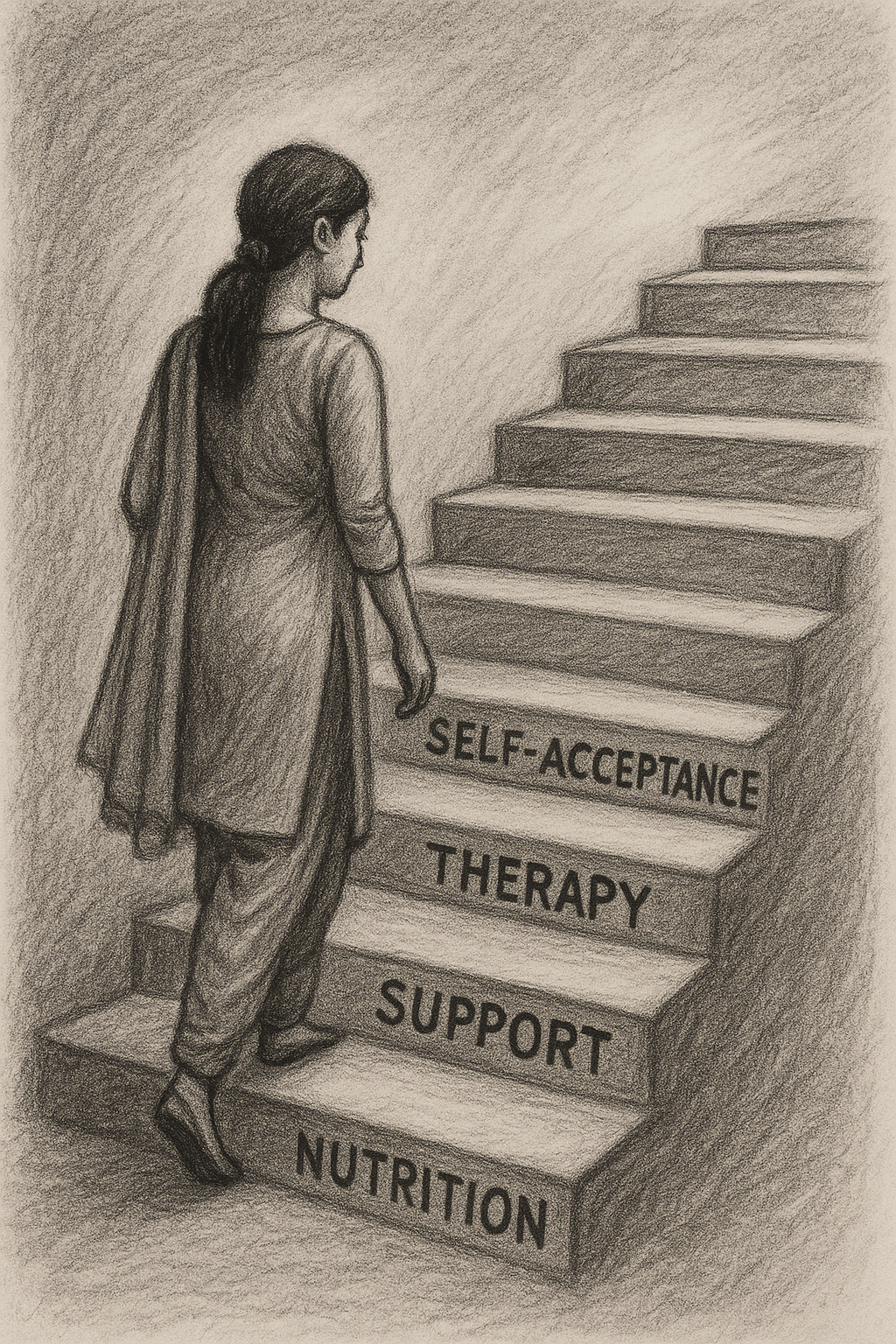
Taking The First Steps
Choose self-acceptance every day. Protecting yourself from the risks of Bulimia Nervosa starts with how you see your body. Supermodels, Instagram reels, and even peers can shape impressionable minds, fuelling Bulimia Nervosa causes, but remember, filters and edits aren’t real life. True beauty comes in many forms, and your worth isn’t measured by comparison. Choosing self-care and self-acceptance isn’t just feel-good advice; it’s a vital part of Bulimia Nervosa treatment and lasting recovery. You can strengthen your acts of self-acceptance by: Celebrating body diversity in media and everyday life. Stopping negative self-talk and avoiding constant comparisons. Focusing on your unique qualities, talents, and strengths beyond appearance. Practising small daily acts of kindness towards yourself, like journaling, movement, or quiet reflection. Every step you take towards self-acceptance builds resilience. The more you nurture your mind and body with understanding, the steadier your path towards recovery becomes. Your relationship with yourself can be your quiet superpower - gentle, strong, and unshakeable.
Can you Prevent Bulimia Nervosa?
While you can’t always prevent Bulimia Nervosa, early recognition and healthy habits can lower your risk: Catch it early: Notice weight obsession, unusual eating habits, or emotional struggles. Talk openly about mental health with family, friends, or school. This approach is part of how to avoid bulimia nervosa. Eat healthy, live healthy: Stop labelling foods as “good” or “bad.” Focus on balanced eating and listening to your body’s hunger cues, not emotional triggers. Learning about nutrition and self-care supports Bulimia Nervosa treatment and long-term recovery.
Creating a Supportive Environment For Yourself
You can lower your risk of Bulimia Nervosa by creating safe, supportive spaces around you - at home, school, and with friends. Talking openly about self-esteem and body image makes a real difference. Here are a few ways to protect your well-being: Share your feelings with trusted friends, family, or teachers instead of bottling them up. Use healthy coping strategies for stress - like journaling, art, music, or movement - rather than turning to food. Speak up and seek support if bullying, peer pressure, or trauma start to affect how you feel about eating. Build emotional resilience through mindfulness, balanced routines, and self-compassion. Nurture a culture of acceptance and kindness where everybody's type is respected. While Bulimia Nervosa can’t always be prevented, these steps can help you strengthen your sense of self, protect your mental health, and build a healthier, lasting relationship with food. Promoting balanced eating habits, emotional resilience, and body acceptance can lower risk factors. By fostering a culture of understanding and support, you help yourself and others develop a positive self-image and a healthy, lasting relationship with food. We know you’re fighting your thoughts every single day. We know that no one else can truly see the battle you’re facing. It takes incredible strength to keep going Just know,
We’re with you.
After Care - Beyond Treatment
Recovery from Bulimia Nervosa doesn’t stop when therapy sessions slow down or the binge-purge cycle fades. That’s when a different kind of work begins - rebuilding trust with your body, emotions, and daily rhythm. Aftercare focuses on sustaining progress, preventing relapse, and strengthening your sense of self over time. It’s about returning to balance - learning to eat intuitively, manage stress constructively, and stay anchored to the people and habits that keep you grounded. Here’s how to make aftercare part of everyday life: 1. Continue Therapy Check-ins: 2. Maintain Nutritional Balance: 3. Create a Daily Routine: 4. Prepare a Relapse Plan: 5. Stay Connected: Aftercare helps you live steadily - with awareness, balance, and self-respect.
Keep occasional appointments with your therapist to navigate triggers that may arise during exams, work changes, or emotional lows. Tip: Schedule monthly or quarterly sessions, even when things feel stable - it keeps perspective fresh.
Work with your dietitian to follow a flexible, nourishing meal plan. Tip: Avoid food rules - focus on satisfaction and energy, not restriction or guilt.
Small, consistent habits build stability. Tip: Try journaling, mindful eating, or evening walks to bring order and calm to your day.
Notice early warning signs like skipped meals or negative self-talk. Tip: Keep a quick-response plan with coping tools and contacts you trust.
Join recovery groups or online spaces where others understand your journey. Tip: Share progress openly - the community builds confidence and continuity.
Crisis Management - Handling Acute Episodes Safely
Even with ongoing care, sudden moments of crisis can surface - an unexpected binge, an overwhelming urge to purge, or a surge of guilt that feels impossible to manage. These moments aren’t failures; they’re signals that extra support is needed right now. Crisis management in Bulimia Nervosa centres on safety, stability, and self-compassion. When urges rise, pause before reacting - step away from the trigger, breathe deeply, and give yourself a minute to interrupt the pattern. These small acts reconnect you with the present. Reach out to someone you trust - a friend, family member, or therapist. If urges feel unmanageable or self-harm thoughts appear, seek emergency help immediately:
AASRA: 91-9820466726 | Snehi: 91-9582208181 | iCall (TISS): 91-9152987821
Caregivers Need Care Too
Helping someone with Bulimia Nervosa (Bulimia Nervosa) takes a lot of heart, patience, and understanding. You can’t make them change, but your support can mean everything. Research shows catching it early helps both the person with Bulimia Nervosa and those around them make smarter choices. Here’s how you can step up: Get to Know Their Struggle: Learn about Bulimia Nervosa so you can provide the right kind of support. Understanding what bulimia nervosa is and its causes can help you empathise better. Point Them to Help: Gently guide them toward professionals, like the team at Sukoon Health, who specialise in Bulimia Nervosa treatment. Create a Safe Space: Be someone they can talk to without fear of judgment. Learn About Bulimia Nervosa: The more you know about Bulimia Nervosa causes, characteristics of bulimia nervosa, and treatment options, the better you can help. Take Care of You: Supporting someone with Bulimia Nervosa is tough - make sure you’re looking after your own mental health too. Your love and dependability can be a lifeline for their recovery. Your love and care can be a quiet anchor for someone with Bulimia Nervosa, helping them feel safe as they work toward recovery. Even small gestures - a kind word, a listening ear - can mean the world.
Hope Is Always Around
Seeing someone you love struggle with Bulimia Nervosa is rough, and starting treatment can feel like climbing a mountain. But you’re stronger than you think, and recovery is absolutely possible. With patience, the right support, and a bit of determination, you can break free from the binge-purge cycle and rediscover what makes life joyful. Consult with highly skilled and professional experts for guidance and a safe space to open up and recover. Recovery isn’t about being perfect; it’s about finding balance and loving yourself again. Every step you take shows how brave you are, and you deserve all the compassion in the world - from others and from yourself. With the right care and a commitment to Bulimia Nervosa treatment, you can take back your life and build a brighter, healthier future.
FAQs about Bulimia Nervosa
Bulimia Nervosa is a serious eating disorder characterised by recurrent episodes of binge eating followed by vomiting, excessive exercise, or misuse of laxatives to prevent weight gain. It’s driven by an intense focus on body shape and weight, often accompanied by feelings of shame and loss of control. People with Bulimia Nervosa may hide their behaviour, making it difficult for loved ones to notice. This secrecy can worsen feelings of guilt and anxiety, reinforcing the binge-purge cycle. Early recognition and understanding of Bulimia Nervosa are crucial to seeking timely Bulimia Nervosa treatment and support. Symptoms include binge eating large amounts of food in a short time, purging (e.g., vomiting or using laxatives), obsession with weight and body image, physical signs like dental issues or swollen glands, and emotional struggles such as anxiety, guilt, or low self-esteem. Recognising physical signs of Bulimia Nervosa is key to early intervention. Other indicators may include frequent trips to the bathroom after meals, fluctuating weight, and preoccupation with dieting or food rituals. Mood swings, irritability, and withdrawal from social events can also signal Bulimia Nervosa. Being aware of these symptoms allows families and healthcare providers to provide timely Bulimia Nervosa support. Bulimia Nervosa causes can stem from a mix of genetic, psychological, and environmental factors. Family history of eating disorders, mental health issues like depression or anxiety, societal pressure for thinness, and traumatic experiences can increase the risk. Other contributors include low self-esteem, perfectionist tendencies, or stressful life events. Peer pressure and exposure to unrealistic body ideals in the media can exacerbate vulnerability to Bulimia Nervosa. Knowing how to know if you have bulimia nervosa helps guide appropriate care. Doctors use the DSM-5 criteria to diagnose Bulimia Nervosa, looking for frequent binge-purge episodes (at least weekly for three months), an excessive focus on body shape, and ruling out other medical conditions. A mental health professional typically conducts a thorough evaluation. Diagnosis may also include physical exams, lab tests, and dental checkups to assess the impact of purging. Interviews with family or caregivers can provide additional context about eating patterns and emotional health. Healthcare professionals identify key characteristics of Bulimia Nervosa through interviews, medical tests, and observation of eating habits. Bulimia Nervosa involves binge eating followed by purging behaviours (e.g., vomiting, laxatives) to avoid weight gain, while Binge Eating Disorder (BED) involves binge eating without purging. Bulimia Nervosa is often tied to a fear of weight gain, whereas BED is more linked to emotional distress. BED can lead to obesity and associated health risks, whereas Bulimia Nervosa often involves fluctuations in weight due to compensatory behaviours. Understanding this difference ensures proper diagnosis and treatment. Misidentifying one for the other can delay appropriate Bulimia Nervosa treatment. Bulimia Nervosa affects about 1.5% of women and 0.5% of men in the general population, often starting in late teens or early 20s. It’s more common in adolescent females, but it can impact people of all ages and backgrounds. Cultural and societal factors may also influence prevalence, with a higher risk in areas that emphasise thinness. Bulimia Nervosa can remain undiagnosed due to secrecy or stigma, so awareness is key. Understanding when Bulimia Nervosa typically develops helps with early detection and intervention. Physical signs include tooth decay from vomiting, swollen salivary glands, acid reflux, irregular periods, electrolyte imbalances, dry skin, hair loss, and weak bones or muscles due to nutrient deficiencies. Other signs may include calluses on the hands from inducing vomiting, frequent sore throats, and chronic fatigue. Weight fluctuations may occur, often masking the severity of the disorder. Regular medical checkups can help identify these signs early. Noticing these physical indicators supports timely Bulimia Nervosa treatment and monitoring. Effective Bulimia Nervosa treatment includes Cognitive Behavioural Therapy (CBT), which helps 50–60% of people, nutritional counselling, and sometimes medications like antidepressants. Support groups and self-help strategies, like journaling or routine eating, also aid recovery. Family-based therapy can provide guidance and reinforce healthy eating habits at home. Lifestyle modifications, including stress management and mindfulness practices, complement formal treatment. Early intervention improves long-term outcomes for those with Bulimia Nervosa. Complications include heart issues (e.g., irregular heartbeats), digestive problems (e.g., acid reflux, IBS), dental damage, kidney issues, hormonal imbalances, and increased risk of depression or suicidal thoughts if untreated. Other potential risks are chronic fatigue, muscle weakness, electrolyte imbalances, and gastrointestinal damage. Mental health complications, such as anxiety, mood swings, and body image disturbance, often accompany physical health issues. Recognising these complications highlights the urgency of timely Bulimia Nervosa treatment. Ongoing medical and psychological monitoring is essential to prevent long-term harm. Bulimia Nervosa often develops in late adolescence or early adulthood (ages 15–25), though it can start at any age. It’s frequently triggered by stress, societal pressures, or emotional challenges during these formative years. Changes in family dynamics, peer relationships, or personal milestones can act as catalysts. Early identification during these years plays a crucial role in ensuring effective Bulimia Nervosa treatment. Approaches may involve psychotherapy, nutritional counselling, and, when necessary, medical intervention to restore both physical and emotional balance. Recognising the signs early and addressing the underlying Bulimia Nervosa causes can significantly improve outcomes and emotional recovery. What is Bulimia Nervosa?
What are the symptoms of Bulimia Nervosa?
What causes Bulimia Nervosa?
How is Bulimia Nervosa diagnosed?
What is the difference between Bulimia Nervosa and Binge Eating Disorder?
How common is Bulimia Nervosa?
What are the physical signs of Bulimia Nervosa?
What is the best treatment for Bulimia Nervosa?
What health complications are often seen in Bulimia Nervosa?
When does Bulimia Nervosa typically develop?





+91 8448156500

+91 1244265238


admissions@sukoonhealth.com

Menu